Loading...
Serving Perris, CA and surrounding areas. (951) 564-0477
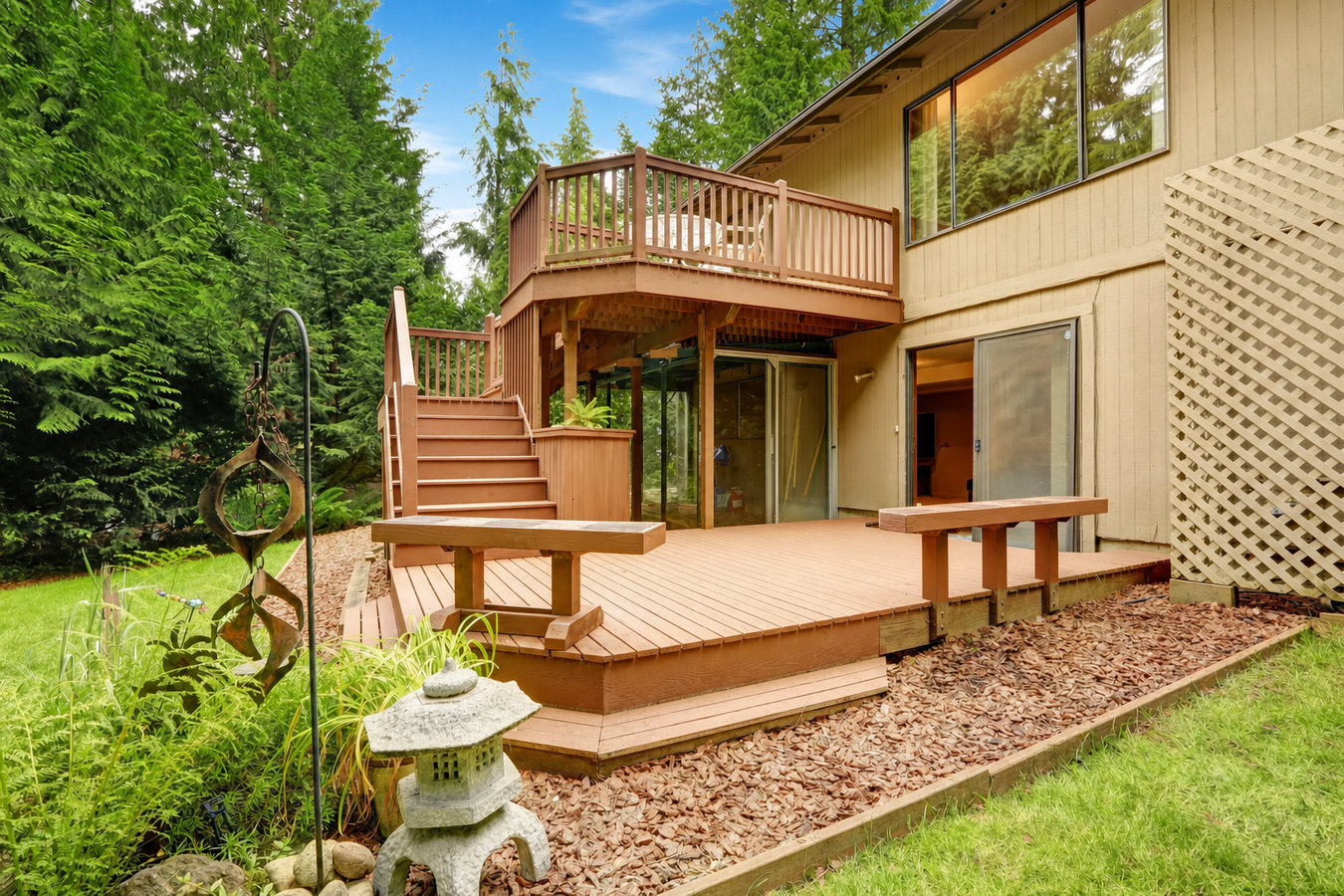
Sloped lots in Perris become usable outdoor rooms with a properly built multi-level deck. We handle permits, HOA submissions, and clay-soil footings so you get a safe, finished space you will actually use.
Sloped lots in Perris become usable outdoor rooms with a properly built multi-level deck. We handle permits, HOA submissions, and clay-soil footings so you get a safe, finished space you will actually use.
Multi-level decks in Perris, CA are two or more connected deck platforms built at different heights - each level serving its own purpose - most projects take one to three weeks of active construction once permits are approved, with permit review typically adding two to four weeks before work begins.
A lot of Perris homes were developed in the 1990s and 2000s on graded hillside terrain, and that slope from the back door to the yard can make outdoor living feel awkward or impossible. A tiered deck uses the grade as a design feature rather than fighting it - you end up with flat, comfortable platforms at every level instead of one cramped patio and a sloped yard you never use. If you are also thinking about adding railings to your finished deck, our deck railing installation service is typically quoted and built as part of the same project.
Every project starts with a free on-site visit. We look at your slope, check soil conditions, note any HOA requirements your neighborhood has, and give you a written estimate before you commit to anything. Call us or fill out the contact form and we will respond within one business day.
If your back door opens onto a steep drop-off and your yard feels more like a hillside than a living space, that is the clearest sign a multi-level deck would transform how you use your home. Many Perris homes on graded lots have yards that are technically large but practically unusable because of the grade change. A tiered deck creates flat, comfortable platforms at different heights so the whole yard becomes livable.
If your current patio feels cramped when you have more than a few people over, or you wish you had a separate spot for the grill away from the seating area, a second level solves that problem without expanding your footprint into the yard. Multi-level decks give you more square footage of outdoor living space on the same lot by using height rather than horizontal spread.
Perris summers are hard on older wood decks - the intense UV and heat cause boards to dry out, crack, and warp faster than in cooler climates. If you notice boards that flex underfoot, gaps widening between planks, or the deck visibly separating from the house wall, the structure needs more than a coat of stain. Replacing an aging deck is a natural time to rethink the layout and add a second level.
If you are planning a pool or spa installation - common upgrades in Perris given the hot summers - a multi-level deck gives you a natural way to separate the wet zone from the dining and lounging areas. Without defined levels, a single flat deck around a pool tends to feel cluttered and hard to arrange. The level change creates visual and functional separation without a fence or wall.
We handle the full project from design through final city inspection - footing excavation designed for Perris clay soil conditions, structural framing for every level, stairs connecting the platforms, decking surface installation, and railing on all elevated edges. Every multi-level deck we build is permitted through the City of Perris Building and Safety Division, and all HOA design review submissions are handled by us if your neighborhood requires it. The price in your contract is what you pay - no surprise additions after work starts.
For homeowners who want the complete outdoor living picture, we can combine a multi-level deck with a deck railing installation as part of the same project - railings are required by California building code on any deck surface 30 inches or more above grade, so we quote them together. If you are still deciding on materials and overall design, our custom deck design and build service covers the full design consultation process before any construction begins.
Suits homeowners with a meaningful grade change from the house to the yard who want two distinct outdoor zones - typically a dining or entertaining platform near the house and a second lower level closer to the yard or pool.
Suits larger lots with significant elevation change where three separate platforms create distinct dining, lounging, and yard-access areas - each level connected by stairs and unified by consistent materials and railings.
Suits homeowners adding or already owning a pool who want the deck to wrap the water feature at one level while a raised platform above serves as a shaded dining and entertaining area separate from the wet zone.
Suits homeowners who already have a single-level deck and want to extend it with a new lower platform, adding square footage and functional separation without tearing out what is already there.
Perris sits in the Inland Empire and regularly sees summer temperatures above 100 degrees, with intense UV that fades and dries out materials faster than coastal California. That climate is hard on outdoor structures built with the wrong materials or the wrong footings. The expansive clay soil throughout the Perris Valley means post footings have to be dug deep and designed to handle seasonal ground movement - soil that swells after rain and shrinks in dry heat will shift shallow footings over time, which is why a contractor who knows local soil conditions matters as much as one who builds a beautiful deck. Much of Perris was also developed on graded hillside terrain in the 1990s and 2000s, which means sloped lots are common and multi-level decks are genuinely the right solution for a large portion of homes here - not a luxury add-on, but the practical way to make a sloped yard usable.
We build multi-level decks across the full service area, including homeowners in Menifee where newer master-planned communities often have sloped lots with HOA requirements, and in Moreno Valley where graded residential neighborhoods from the same development era present similar conditions. If your community has a homeowners association, we handle the design review submission alongside the city permit process so both approvals move forward at the same time.
We ask about your yard size, whether it slopes, what you want to use the deck for, and whether you have an HOA. That is how we figure out what kind of project you have and whether a site visit makes sense. You can ask questions too - how long we have been building in Perris, whether we pull our own permits, how busy the schedule is. We respond within one business day.
We come to your property, look at the slope, check the exterior wall where the deck will attach, and note any obstacles like irrigation lines or utility boxes. We talk through how many levels you want, what materials appeal to you, and your budget range. Expect the visit to take 30 to 60 minutes and a written estimate within a few days - no pressure to decide on the spot.
Once you sign the contract, we submit to the City of Perris Building and Safety Division and, if needed, prepare your HOA design review submission at the same time. Permit review in Perris typically runs two to four weeks. We manage both processes and keep you updated - no digging or building happens until permits are in hand.
Construction starts with footing excavation and a city inspection before concrete is poured. Framing follows, then decking boards, stairs, and railings. A city inspector returns for framing and final inspections. When the inspector signs off, we do a walkthrough with you, hand over permit documents, and haul away all construction debris. Keep the permit paperwork - you will want it if you ever sell.
Free on-site estimate, written quote before you commit, permits handled start to finish.
(951) 564-0477Every multi-level deck we build in Perris goes through the full city permit and inspection process under our contractor license. That means a licensed city inspector signs off on the structure before we call the job done. You get documented proof the work was built to code - no unpermitted work to disclose when you sell, no insurance complications if something ever happens.
The Inland Empire - including the Perris Valley - has significant areas of expansive clay soil that swells when wet and shrinks when dry. We design footings conservatively deep to account for this movement, which matters especially on multi-level decks where structural loads are higher than a simple ground-level patio. A deck built on shallow footings in this soil will shift. Ours do not.
A large share of Perris homes - particularly in Sycamore Creek and other master-planned neighborhoods - have HOA design review requirements separate from city permits. We handle both submissions at the same time so you are not waiting for one approval before starting the other. You do not have to chase paperwork or translate construction drawings for a review board.
We recommend and build with materials suited to Perris summers, not whatever is cheapest. Composite decking or treated wood with a high-quality UV-resistant finish performs significantly better here than standard untreated pine. The North American Deck and Railing Association publishes material and maintenance guidance we follow to ensure your deck still looks good five summers from now.
Those four things - proper permits, soil-appropriate footings, HOA management, and climate-matched materials - are what separate a multi-level deck that holds its value from one that becomes a liability. We cover all four on every project we take on in Perris.
California building code requires railings on any deck surface 30 inches or more above grade - we install them as part of your multi-level build or as a standalone project.
Learn MoreIf you are still working through layout, materials, and budget before committing to a multi-level design, our custom design consultation covers every decision before construction begins.
Learn MorePermit timelines in Perris mean the sooner you start, the sooner you are enjoying your new outdoor space - contact us today to lock in your build date.